Field guide by region
Where dinosaur fossils are found
Dinosaur fossils don't turn up evenly around the world -- they come from specific rock formations laid down in the right conditions to preserve bone, in places where erosion has since brought that rock back to the surface. These 10 formations, across six continents, are responsible for most of what's in museums and the fossil trade today.
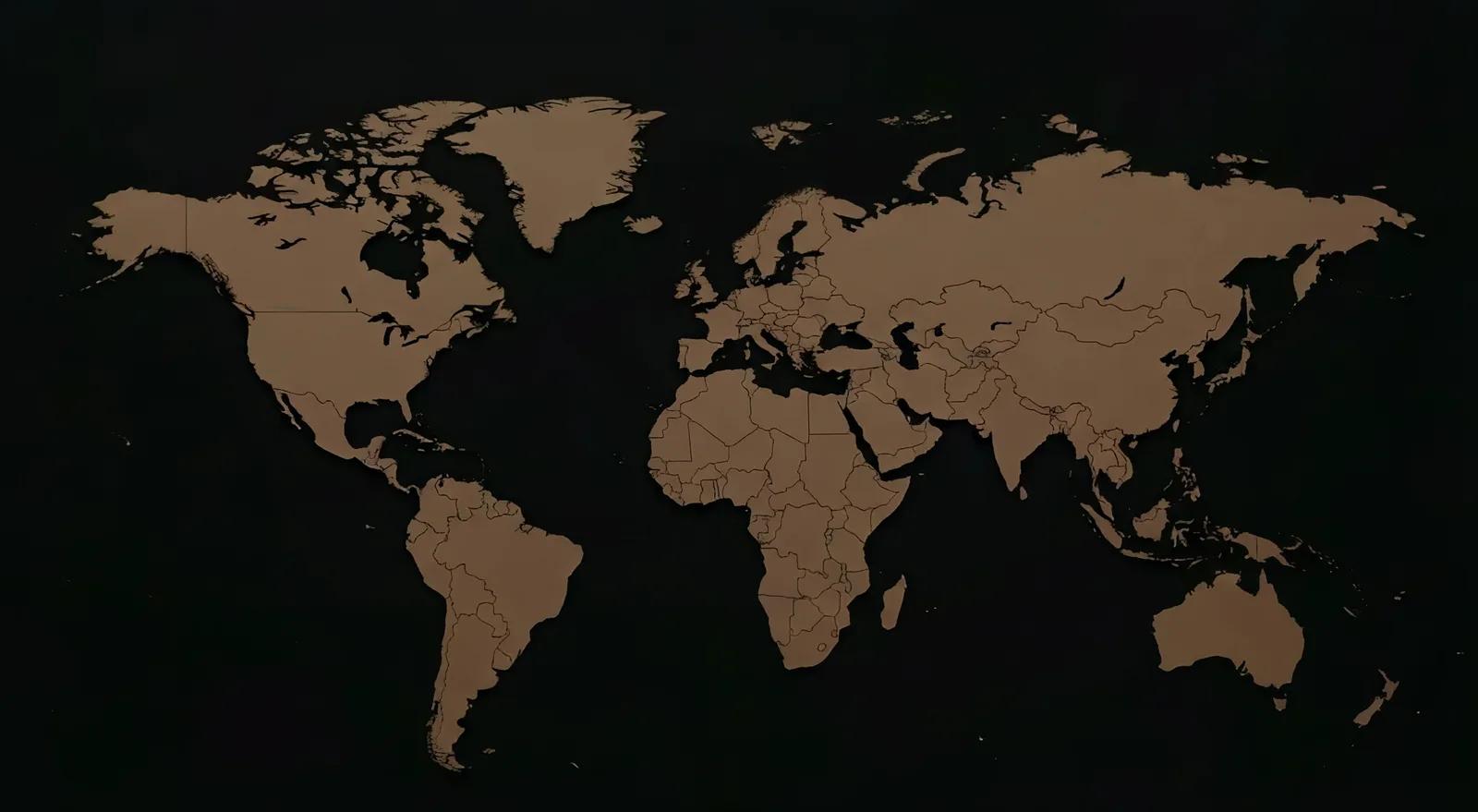
hover a pin for top species · click to jump · stylized, not to scale · © Dino History World original map illustration
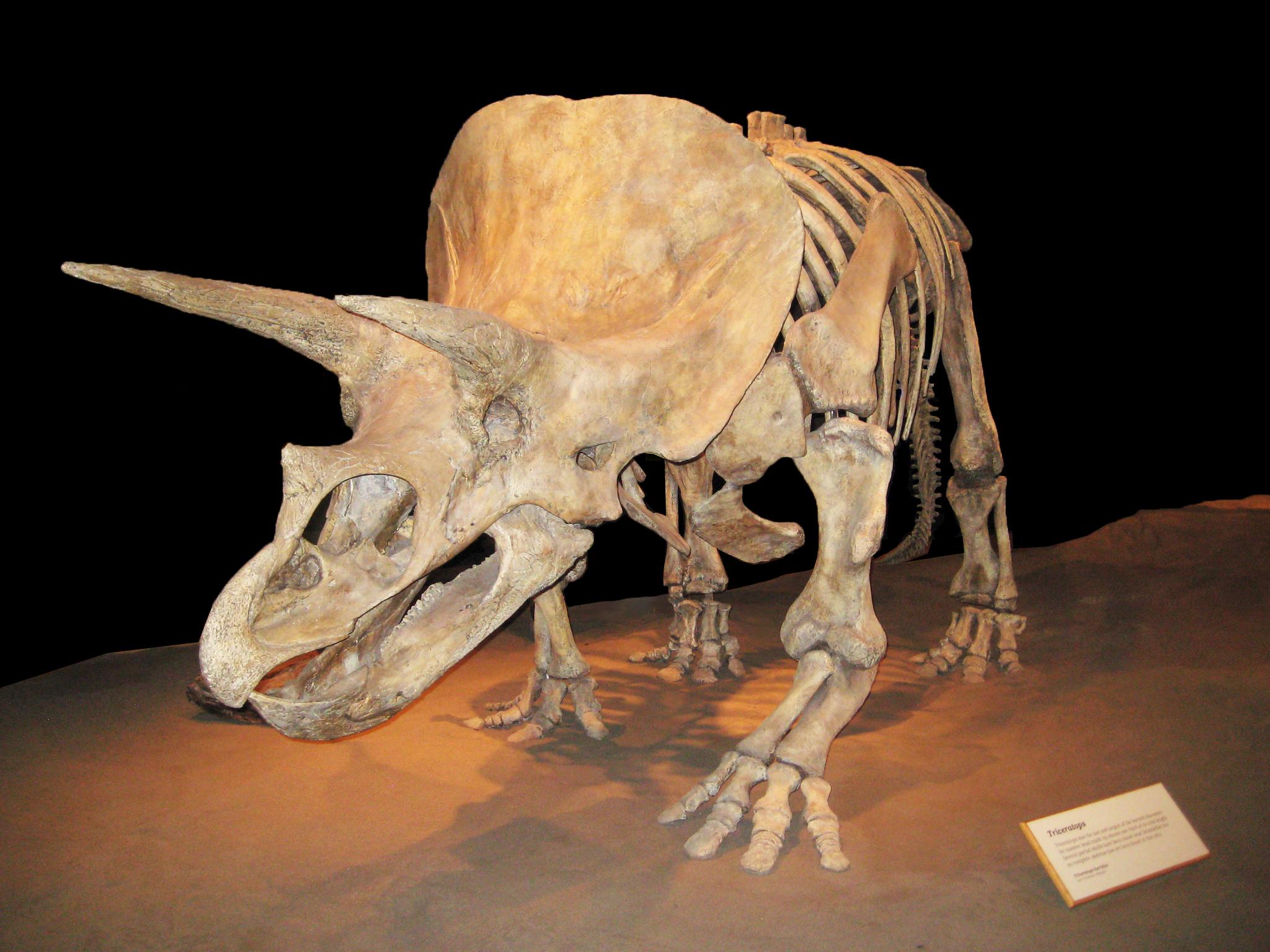
Hell Creek
Late Cretaceous (Maastrichtian), ~66-68 million years agoHell Creek Formation · USA -- Montana, North & South Dakota, Wyoming
The single most productive dinosaur-bearing formation in North America, and the rock that preserves the very end of the Age of Dinosaurs. Most of the record-setting fossil auction sales -- Sue, Stan, and Gus -- all came out of the Hell Creek.
Collecting: Isolated teeth and bone fragments are common on legal, permitted private land; articulated skeletons are rare and scientifically significant.
Triceratops specimen, Royal Tyrrell Museum -- © MathKnight, CC BY-SA 4.0, via Wikimedia Commons

Morrison
Late Jurassic (Kimmeridgian-Tithonian), ~157-152 million years agoMorrison Formation · USA -- Colorado, Utah, Wyoming, Montana, and neighboring states
The formation behind most of the giant sauropods and plated/armored dinosaurs that defined 19th- and 20th-century dinosaur discovery in North America, including the original Bone Wars quarries.
Collecting: Large sauropod bone is the most commonly recovered material; Dinosaur National Monument (Utah) preserves an in-situ quarry wall visitors can view without collecting.
Diplodocus carnegii cast, Museum für Naturkunde Berlin -- Photo by Dosseman, CC BY-SA 4.0, via Wikimedia Commons
Gobi Desert
Late Cretaceous (Campanian-Maastrichtian), ~84-66 million years agoDjadochta & Nemegt Formations · Mongolia and northern China
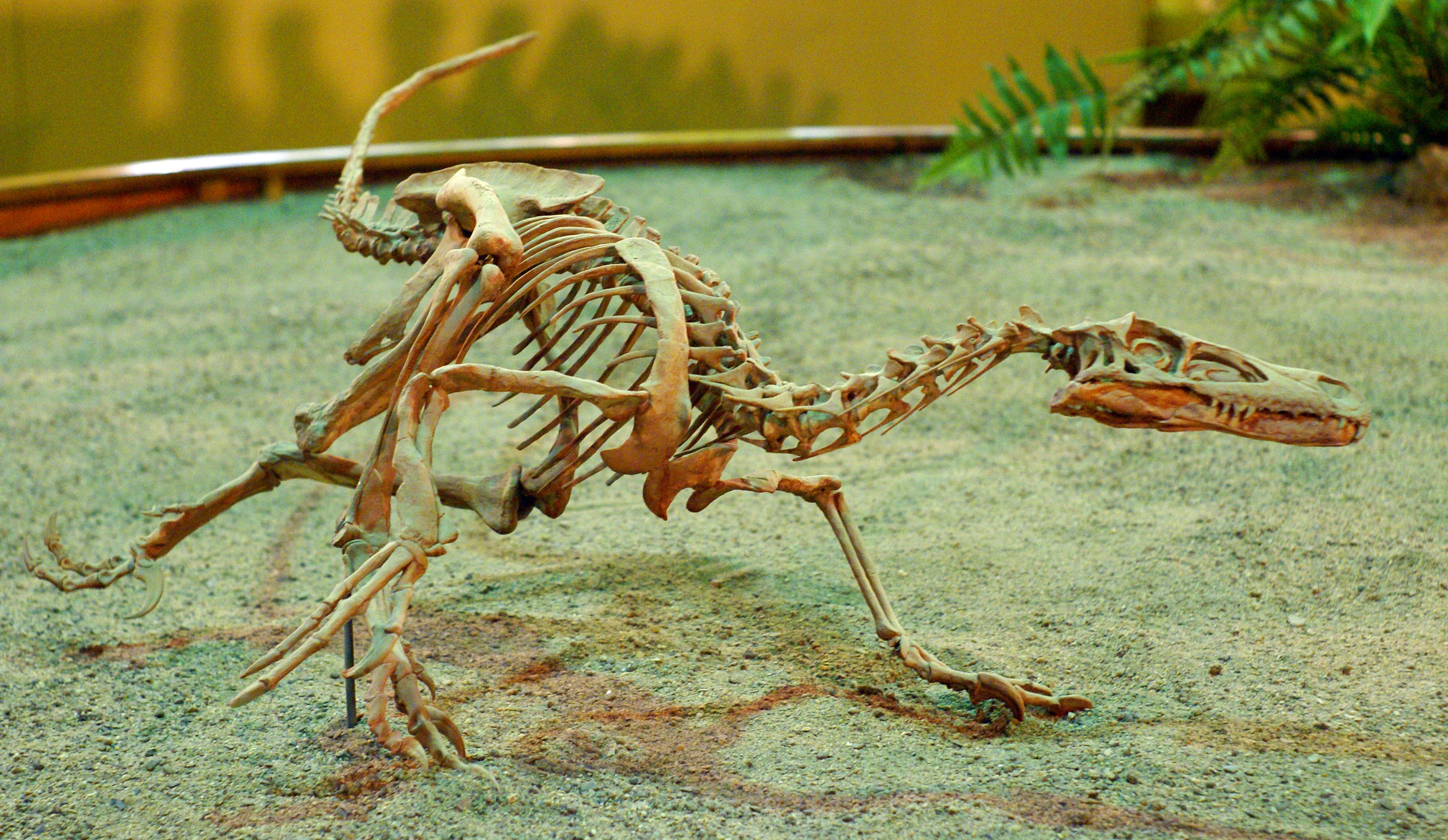
Extremely arid conditions in the Gobi produce some of the best three-dimensionally preserved dinosaur skeletons anywhere, including specimens caught in the act of dying -- the 'Fighting Dinosaurs' block (a Velociraptor and Protoceratops locked together) is the most famous example.
Collecting: Fossil collecting and export are tightly regulated by Mongolian law; nearly all scientifically significant Gobi material is collected under formal joint research expeditions, not private hunting.
Velociraptor skeletal mount, Wyoming Dinosaur Center -- CC BY 2.0, via Wikimedia Commons

Liaoning
Early Cretaceous, ~125-120 million years agoYixian & Jiufotang Formations (Jehol Biota) · China -- Liaoning Province
Fine-grained volcanic ash preserved entire ecosystems in exceptional detail, including soft tissue -- this is the source of nearly all direct fossil evidence of feathers on non-avian dinosaurs, which reshaped the modern understanding of the dinosaur-bird relationship.
Collecting: A commercial fossil trade in Liaoning material exists, but export of significant vertebrate fossils from China is restricted by law; buyers should treat provenance documentation here as essential, not optional.
Sinosauropteryx prima fossil plate, Houston Museum of Natural Science -- via Wikimedia Commons
Patagonia
Late Cretaceous (Cenomanian), ~99-97 million years agoCandeleros & Huincul Formations (Neuquen Group) · Argentina
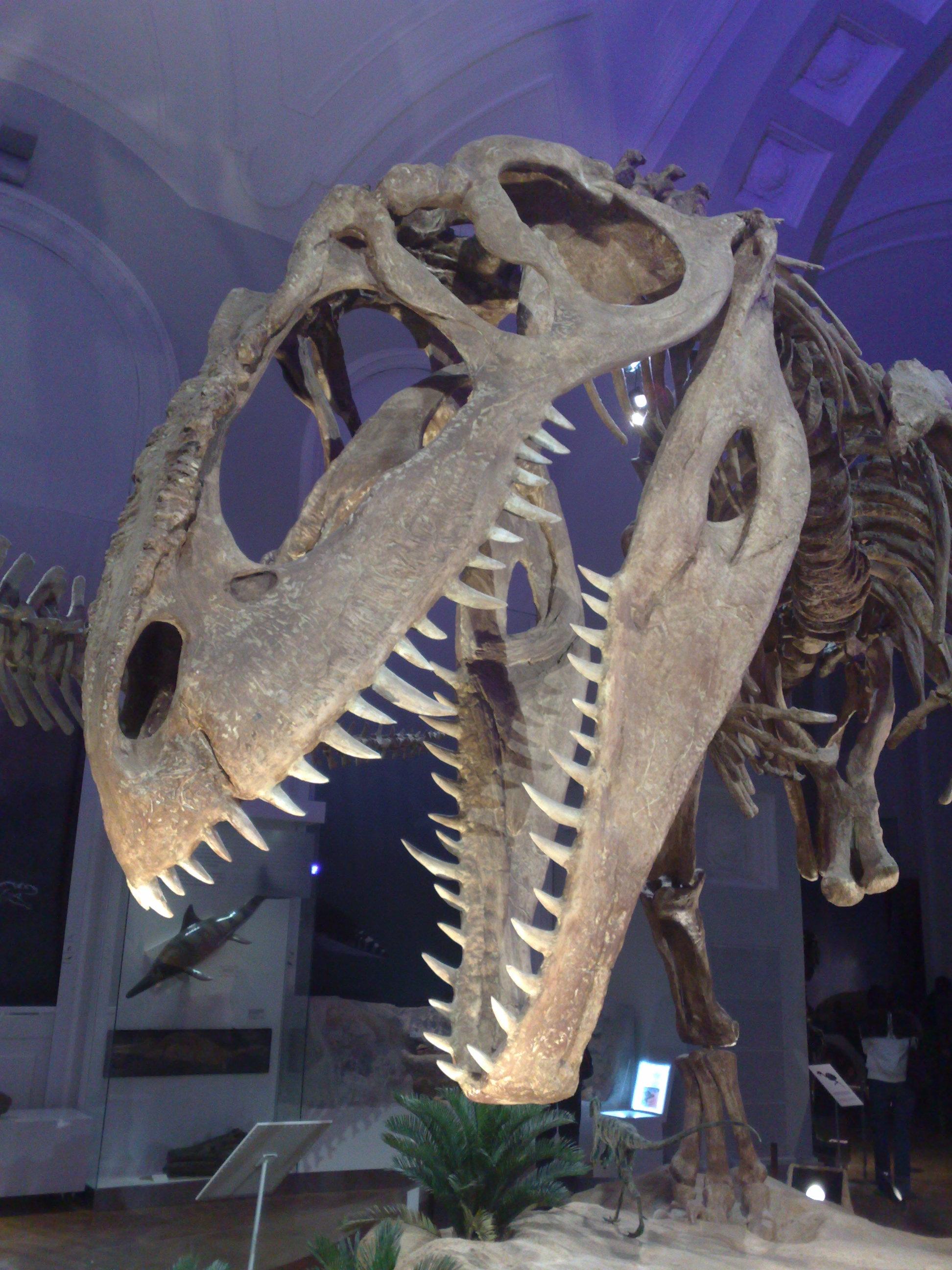
Home to the largest land animals ever confidently described, alongside the theropods that hunted them -- this region has produced some of the largest sauropod and carcharodontosaurid skeletons known.
Collecting: Fossils are the property of the Argentine state; excavation is carried out by permitted academic institutions, and most major finds end up in Argentine museums such as the Museo Municipal Carmen Funes.
Giganotosaurus mounted skull -- via Wikimedia Commons
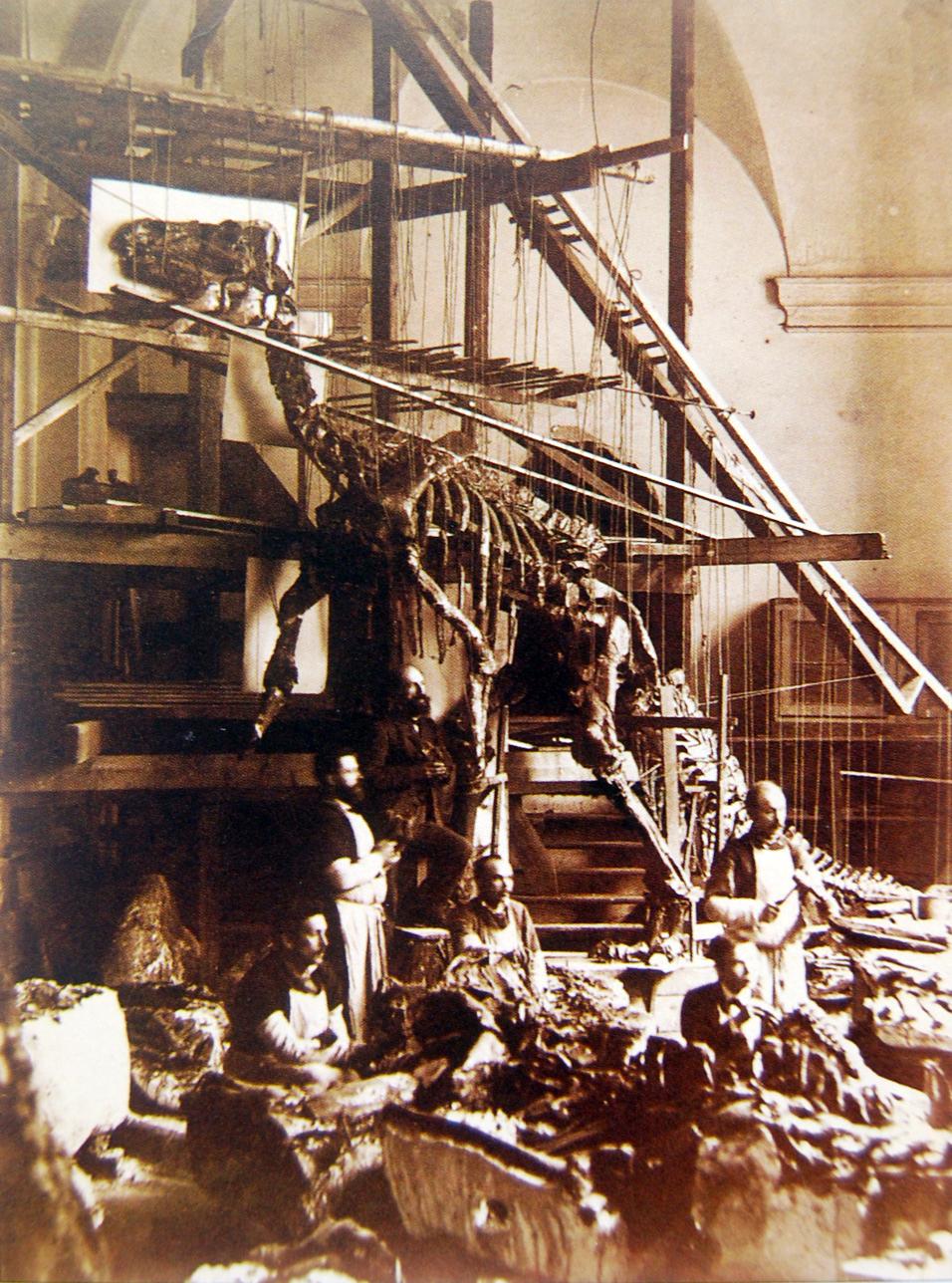
Isle of Wight & the Weald
Early Cretaceous, ~130-125 million years agoWessex & Wealden Formations · United Kingdom -- Isle of Wight, and the Weald (Surrey, Sussex, Kent)
The Isle of Wight's eroding cliffs are Europe's richest dinosaur coastline, and the source of the very first dinosaur ever scientifically named -- Iguanodon, described in 1825 from Wealden material found on the mainland.
Collecting: Beach collecting of loose material washed from the cliffs is a popular, legal hobby along much of the Isle of Wight coast; extracting fossils directly from the cliff face is discouraged for safety and conservation reasons.
Historic 1882 Iguanodon bernissartensis mount, Brussels -- Photo by Aimé Rutot, public domain, via Wikimedia Commons
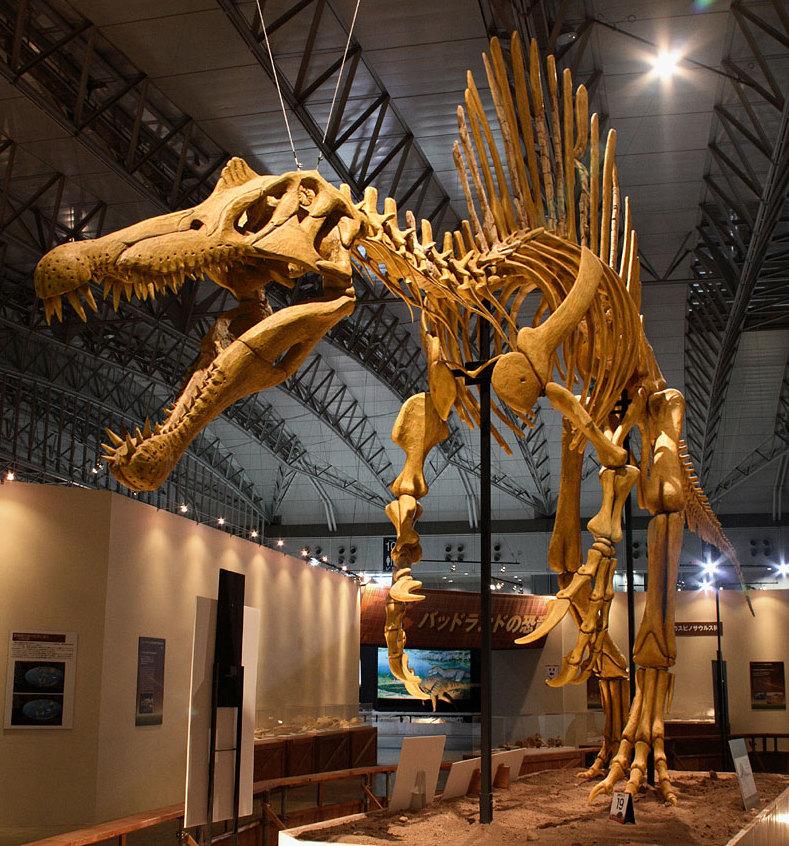
Kem Kem
Late Cretaceous (Cenomanian), ~100-94 million years agoKem Kem Group · Morocco
A dense cluster of large predatory dinosaurs in one place -- Spinosaurus, Carcharodontosaurus, and Deltadromeus all hunted the same river system, an unusual concentration of giant theropods that's still debated among paleontologists as the 'Kem Kem puzzle.'
Collecting: An active commercial trade in Kem Kem teeth and bone exists and supplies much of the loose 'Spinosaurus tooth' material sold internationally; export from Morocco is regulated, so provenance paperwork matters here as much as anywhere on this list.
Spinosaurus mounted cast, Field Museum -- CC BY-SA 4.0, via Wikimedia Commons

Tendaguru
Late Jurassic (Kimmeridgian-Tithonian), ~152-145 million years agoTendaguru Formation · Tanzania
German expeditions excavated this site from 1909-1913 in one of the largest fossil-dig operations of its era, shipping crated bone by porter caravan to the coast; the giant sauropod mount mistakenly long labeled 'Brachiosaurus' in Berlin is Tendaguru material now recognized as its own genus, Giraffatitan.
Collecting: Tendaguru's giant sauropods and stegosaurs are a close African counterpart to North America's Morrison Formation fauna from roughly the same period; active excavation today is led by Tanzanian and partner-institution research teams, not commercial collectors.
Giraffatitan brancai mount, Museum für Naturkunde Berlin -- CC BY-SA 4.0, via Wikimedia Commons
Winton
mid-Cretaceous (Cenomanian), ~101-96 million years agoWinton Formation · Australia -- Queensland
Australia's richest dinosaur formation, and the source of most named Australian dinosaur genera, including a genuine dinosaur stampede trackway site at Lark Quarry, one of the few of its kind anywhere in the world.
Collecting: Much of the significant material comes from sheep and cattle stations across outback Queensland, often reported by station owners; Australian Age of Dinosaurs (near Winton) prepares and houses much of this material and runs public fossil-preparation visits.
Lameta
Late Cretaceous (Maastrichtian), ~70-66 million years agoLameta Formation · India -- Madhya Pradesh, Gujarat, Maharashtra
India's main dinosaur-bearing formation, notable for extensive in-situ sauropod nesting grounds -- dense clusters of fossilized titanosaur eggs, some still exposed in the original limestone bedding, alongside the abelisaurid predators that likely hunted the nesting colonies.
Collecting: Collecting is tightly restricted -- vertebrate fossils are protected under Indian antiquities and wildlife law, and known egg and bone sites are managed by the Geological Survey of India and state governments, not open to private collecting.
Want to dig yourself?
Real, verifiable operations that put a hammer or a brush in your hand -- from week-long excavation campouts in Montana to a two-hour beach walk in England. Most are still concentrated in the Hell Creek and Morrison country of the American West, simply because that's where the commercial guided-dig industry is most developed, but it isn't the only place you can do this.
Guided Hell Creek dig site tours and multi-day programs run by a working commercial paleontology outfit with its own museum.
"Dig for a Day" program at an active site, open to ages 3 and up with a guardian; runs seasonally, late spring through early fall.
Multi-day campout excavation programs pairing amateurs with earth-science professionals on real Montana dig sites, running for over 30 years.
Half-day site tours through multi-day dig adventures, with instruction for all experience levels.
A 75-minute simulated outdoor dig, ages 7+, run daily in summer (June-August) at Midland Provincial Park, 6km from the museum -- the same hands-on format as the US operations above, at Canada's flagship dinosaur museum.
Two-hour guided beach fossil walks along the Isle of Wight coast, run by museum staff during school holidays at low tide -- no tools needed, and finds you make on the walk are yours to keep. Book by phone in advance; places are limited.
Planning a legal dig of your own? See our field gear guide for what to bring, and our fossil market guide if you're buying instead of hunting.