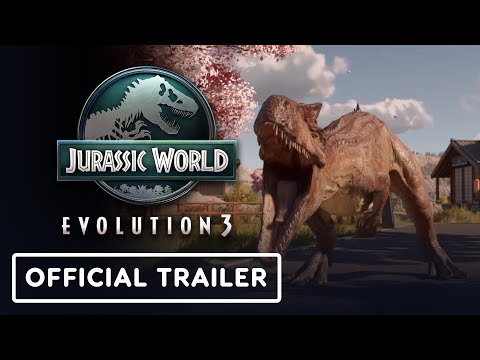
Jurassic World Evolution 3 is Frontier Developments' third entry in its dinosaur park-building series, released October 21, 2025 for PC, PlayStation 5, and Xbox Series X/S. It landed with "generally favorable" reviews on Metacritic, 99 species at launch, and a campaign that finally gives Jeff Goldblum's Ian Malcolm something to do again. This guide covers what changed since Evolution 2, what it actually costs, and what Frontier has planned next, including a DLC that lands in a few days.
What Is Jurassic World Evolution 3?
Jurassic World Evolution 3 is a construction-and-management sim in the same family as Frontier's Planet Zoo and Planet Coaster: build a park, place enclosures, keep dinosaurs alive and comfortable, and manage the business side while things inevitably go wrong. The campaign is set after Jurassic World Dominion and puts you in charge of the Dinosaur Integration Network, an in-universe body tasked with rehabilitating and housing dinosaurs across ten real-world locations, including Indonesia, Japan, and Hawaii. A group calling itself Extinction Now spends the campaign trying to sabotage that work, which gives the sim an actual antagonist instead of just weather and escaped raptors. Outside the campaign, sandbox mode lets you build freely on any map, including a new custom-island generator, and challenge mode hands you a scenario with a specific win condition instead of an open-ended park.
What's New in Jurassic World Evolution 3
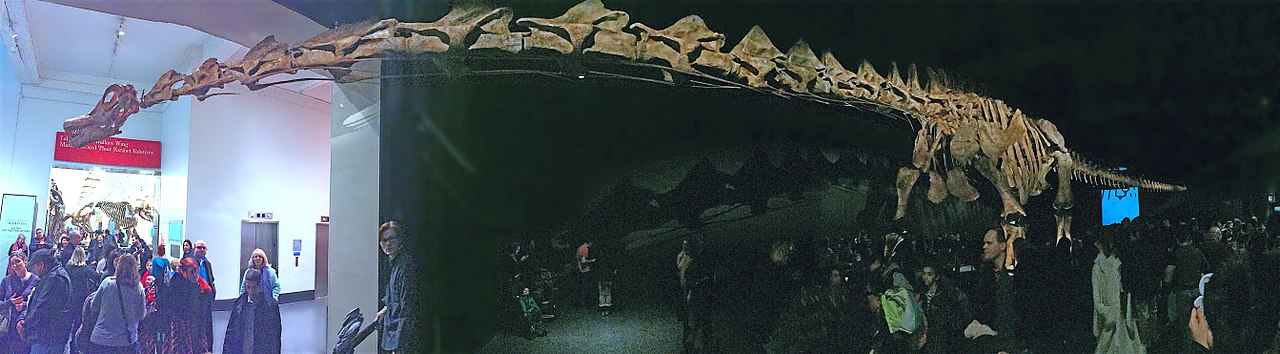
The headline feature is gender. Every animal in Evolution 3, aside from most DLC-only additions, has distinct male, female, and juvenile forms, and compatible pairs can breed if you place a nesting area in their enclosure. Juveniles inherit traits, cosmetic or behavioral, from either parent, and several herd species now need a specific gender ratio to stay happy, not just enough space and food. It's a real structural change, not a coat of paint. The roster grew too: Jurassic World Evolution 3 launched with species that had never appeared in the series before, including Lokiceratops, Ornithomimus, Caiuajara, Psittacosaurus, and the enormous titanosaur Patagotitan. Deinonychus got reworked rather than just re-added, with a feathered redesign that replaces its old, fully scaled look. On console, a new complexity meter caps how much you can build once a park gets busy enough, tallying animals, fences, and scenery pieces against a limit the hardware can actually handle.
Jurassic World Evolution 3 vs. Evolution 2: What Changed
If you played Evolution 2 and are deciding whether the sequel is worth it, the honest answer is: probably, if breeding and terrain tools are things you actually want. Beyond the gender and breeding system, Evolution 3 added deeper terrain sculpting and modular scenery placement, similar to what Planet Zoo already does, plus Frontier Workshop support for sharing parks, buildings, and enclosures with other players. Frontier has also been feeding Evolution 2's base-game species back into Evolution 3 as free updates instead of making you rebuy them. Kentrosaurus arrived in November, Majungasaurus in January, Cryolophosaurus in February, and Amargasaurus in March, with Dracorex and Liopleurodon still planned. April and May had no additions, with no official explanation from Frontier.
Platforms, Price, and How to Buy
Jurassic World Evolution 3 is available on Windows PC, PlayStation 5, and Xbox Series X/S, single-player only. The Deluxe Edition adds four extra species at launch: Protoceratops, Guanlong, Thanatosdrakon, and Concavenator. Frontier announced the game in May 2024, showed the first trailer in June 2025, and shipped it that October, a fairly quick turnaround for a series entry with this much new mechanical work under the hood.
Critical Reception: Is Jurassic World Evolution 3 Any Good?
Yes, with one real caveat. Metacritic has it at 81 on PC, 82 on PS5, and 78 on Xbox Series X/S, solidly in "generally favorable" territory. Shacknews called it the series finally reaching its full potential; Polygon and TheGamer both singled out the visual work, with TheGamer calling it the best-looking game the series has produced. The pushback, mainly from TechRadar, is that keeping every animal's comfort stats balanced becomes a genuine chore in a large park, and the game doesn't hide that from you. If you disliked the micromanagement in Evolution 2, Evolution 3 asks for more of it, not less, in exchange for more realistic-feeling animals.
DLC Roadmap: What's Coming Next
The Wetlands Pack shipped December 9, adding Austroraptor, Hypsilophodon, and Irritator, and brought back Deinocheirus from Evolution 2's own DLC. The Rebirth Expansion followed on June 16, 2026, priced at $24.99. The next paid content, Crocodilia Coast, is scheduled for August 11, 2026 on Steam, PS5, and Xbox Series X, and introduces the franchise's first crocodilian: Deinosuchus, a genuine Late Cretaceous predator that could rival a small tyrannosaur in bite force.
People Also Ask
Is Jurassic World Evolution 3 multiplayer? No. It's single-player only; Frontier Workshop lets you upload and download parks and blueprints, but you can't build a park together in real time.
How many dinosaurs are in Jurassic World Evolution 3? 99 species with the Wetlands Pack and Deluxe Edition included, 92 without.
Does Jeff Goldblum appear in Jurassic World Evolution 3? Yes, reprising his role as Dr. Ian Malcolm throughout the campaign.
Is Jurassic World Evolution 3 better than Evolution 2? Critics mostly say yes, citing an 81-82 Metacritic average against Evolution 2's more mixed reception, driven mainly by the new breeding system and terrain tools, though the added animal-management complexity is the one recurring complaint.
Frontier has committed to feeding Evolution 2's remaining base roster back into Evolution 3 as free updates, so the species list keeps growing even between paid DLC. Dracorex and Liopleurodon are next in line, with no confirmed date yet.